Posts

Showing posts with the label history

Edison's Errors: When Genius is 99 Percent Flop Sweat
Image
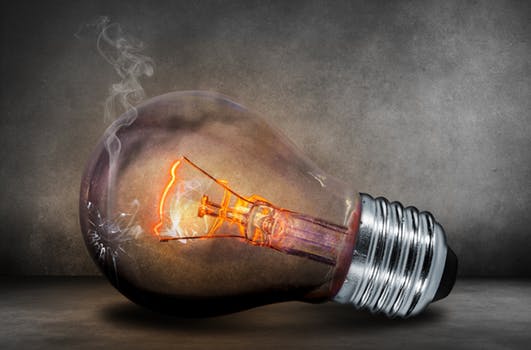
When you think of inventors, the iconic example might be Thomas Edison, who brought us the electric lightbulb. In the process, he discovered what we call the "Edison effect." The idea is that in a vacuum, electrons will move from a heated surface to a cooler one. Simple as it sounds, it's a fundamental principle underlying modern electronics, from toasters to computers. By the time the Wizard of Menlo Park died in 1936 at the age of 86, he had managed to attach his name to 2332 patents worldwide. Some of those creations he produced personally, some he helped develop as part of a team, and sometimes the connection is dubious. It seems if you worked in Edison's lab, he had no problem sticking his name on your work. (Edison didn't invent taking credit for the efforts of his underlings, but he certainly brought it to new levels.) Still, there's no denying Edison had a deep domain knowledge. The lightbulb, the phonograph, the movie camera—these are the kin...

The Marx Brothers: Princes of Practice

Image
When we think of legends of comedy, the Marx Brothers might come to mind. In the years leading up to World War II, they were the toast of Hollywood. Their zany antics, ribald double entendre, and disregard for authority proved to be a winning formula—not just for their day, but for generations of college students born long after the war.   Watching the Marx Brothers’ old black and white movies, it’s tempting to believe that Groucho, Harpo and Chico must have been endowed with the magical comic gene, winners in the cosmic, humor lottery. What about poor Zeppo, the fourth, and largely unheralded brother, sometimes shuffled to the side as the romantic lead? In most movies, this would be a plum role, but in a Marx Brothers film, it was akin to sitting on the bench. Zeppo, bored with his lack of star billing and reportedly never really invested in the whole comedy enterprise, eventually dropped out. His lack of interest is a pretty good indicator of why, when we think of ...

Procrastination, the McClellan Problem, and You

Image
General George B. “Little Mac” McClellan was the Union force commander during the Civil War. Beloved by his men, and a stickler for training, you’d think it might be him that we remember over Ulysses S Grant, former Union general and later the 18th President. But Lincoln eventually made Grant the Northern army’s leader for a single, rather important reason: Grant was willing to engage the enemy. McClellan, despite an overwhelming number of troops and material, appeared to be allergic to battle. McClellan’s strategy seemed to be waiting for just the right moment when the perfect nexus of geography, troop force, weather, and adequate supplies would present itself.  History tells us that early in the war it never did—or more importantly, that it never does. Which brings me to glucose, the energy our brains and bodies run on. As a resource, it’s something our system tends to be stingy with.  Most of us expend energy only when we deem it absolutely necessary. Not a whole l...

The Strange Case of Phineas Gage, redux

Image
In January of 2013, I wrote a post on one of neuroscience’s most famous cases. New details make it necessary to retell the story. It’s the tale of railroad foreman Phineas Gage. Imagine a beautiful day on September 13, 1848 in the Vermont countryside. It’s about 4:30 in the afternoon. James K. Polk, ‘young hickory’, is the current president and the Civil War hasn’t ripped the country apart yet. The hottest thing in modern technology? The railroad train. To that end, a Rutland Burlington railroad crew is finishing up a long day of drilling holes several feet deep into the stubborn concrete granite. Now the work of tamping explosive charges down into the holes has begun. When the explosives are discharged, the granite will be blown apart and the next section of track can be laid. It’s dangerous and deadly work if you’re a tamper. Mistakes are almost always fatal.  Five foot six Phineas Gage is a compact but strong tamper. He’s had his tamping rod engraved with his initials...

What Do Aretha Franklin, Paul Simon, and Lynyrd Skynyrd Have in Common?

Image
When it comes to Carol Dweck’s concepts of mindset, northwestern Alabama might not be the first region that leaps into your mind. And yet sitting on the north bank of the Tennessee River is an unlikely success story, almost a perfect illustration of just how much can go right when growth-minded attitudes are in place.   Growth mindset, of course, is the attitude that skill and intelligence can always be improved with effort. It frames challenges as opportunities, failures as lessons to be learned, and success as a result of pushing oneself. On the other hand, fixed mindset holds talent as something inborn and innate. The prospect of failure is a terrifying specter lurking over every risk, threatening to show you were never that great after all.  Even if you're familiar with these ideas, the story of Muscle Shoals, Alabama is a beautiful illustration of the importance of attitude.   In 1965, songwriter and musician Rick Hall opened up a recording studio ...

Caveperson Chemistry: Rewriting Our Family Tree

Image
Located in the mountains of southwestern Siberia, the Denisova Cave takes its name from a Russian hermit named Denis, rumored to have lived there in the 18th century. When some intriguing bones were discovered in this cavern, the moniker derived from his long-dead hermit would gain a new use: as a shorthand for a stunning discovery about the world of our early human ancestors. In 2008, Russian researchers discovered the finger bone of a young humanoid female. It was the wrong shape to come from a Homo sapien, but when scientists sequenced the DNA, it didn't seem to belong to a Neanderthal, either. They had found what appears to be an entirely separate group of early hominids whose time on this planet briefly overlapped with ours. A genetic cousin to us, and a genetic sister to the Neanderthal. They had found the Denisovans. Where early Homo sapiens and Neanderthals split into separate species some 440,000 years ago, Denisovans didn't branch off from the Neanderthals unti...

The Secret Music That's Always Playing in Your Head

Image
Listening to music is one of the most compelling human experiences. Music taps deeply into our sense of feeling, often highlighting and perhaps even giving a voice to our emotions. For this reason, it’s no surprise that in Holhe Fels cave in the hills of west Ulm Germany, archeologists discovered an ancient flute that carbon dates to 35,000 years ago. What’s kind of surprising is that it’s made of a vulture bone. What’s very surprising is that it’s tuned to the pentatonic scale. The pentatonic scale is the set of notes virtually every song you know is built on. Everything from German Baroque to ragtime to West African music to to jazz to Sami joik singing to polka to third-wave Canadian psychobilly, and even that earworm that was in your head all of yesterday, the one you finally managed to shake a few minutes ago. Fundamentally, music is just a set of vibrations operating at a frequency level (measured in Hz or cycles per second) detectable to human ears, which our brains t...

The Twain Brain, or, Why Smart People do Stupid Things

Image
“A man who carries a cat by the tail learns something he can learn in no other way.” So said Mark Twain, printer, steamboat pilot, journalist, failed miner, entrepreneur, abolitionist, lecturer and supreme humorist. Twain is perhaps the greatest American storyteller and writer ever produced by the fifty states. Whether attacking kings, hypocrites, or the literary offenses of Fenimore Cooper , Twain was famous for his razor-sharp wit and his allergy to BS. Yet that same man drove himself into bankruptcy, ignoring the council of his most trusted pals in favor of pouring his fortune into a series of disastrous inventions. He once invested the equivalent of 8 million dollars in the Paige typesetting machine, a marvel of engineering that dazzled crowds but also constantly broke and was obsolete by about 1884. So why did a man renowned for not suffering fools pour his fortune into one fool’s errand after another? Could it be that Twain, like the rest of us, was seduced by a “magic bul...

The Intersection: Where Bacon Meets Chocolate, and Creativity Meets Genius

Image
Want to radically ramp up your creativity? In his new book The Medici Effect , Frans Johansson believes he can help you. If you're a fan of the Renaissance, you are probably familiar with the House of Medici. This powerful political dynasty bankrolled generations of thinkers, poets, philosophers, sculptors, painters, architects, and scientists. It is no exaggeration to say that in the 15th century, the Medicis were a driving force behind making Florence, well, Florence. We still enjoy their legacy; Medici sponsorships enabled the work of heavy hitters like Galileo and Botticelli, as well as Donatello, Raphael, Michelangelo  and  Da Vinci. (The artists, not the Teenage Mutant Ninja Turtles. Although that would be an amazing show...) According to Johansson, the Medici genius was creating conditions that fostered the intersection of diverse disciplines. This co-mingling ultimately led to extraordinary leaps in innovation. Johansson argues you can create your own ...

Robbing a bank with your wristwatch

Image
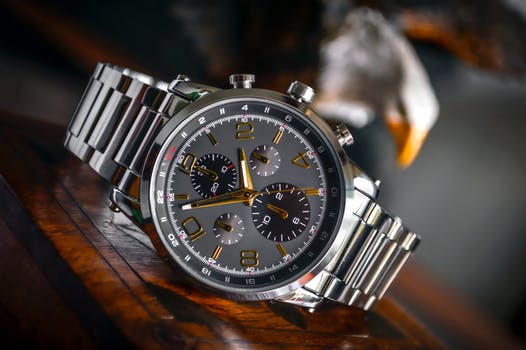
As you stand in the check-out line this holiday season, you may find yourself wondering why two minutes in a loud, crowded store can feel like an hour, or why an hour of relaxing with a good book can flit by in what feels like seconds. Why are we so bad as a species at tracking lengths of time? In neuroscience, the prevailing strategy for understanding the "why" of any brain behavior is to think of it in terms of evolutionary advantage. What was life like back when humans were just starting to become humans? A lot of seemingly negative or unhelpful traits make sense in this context. There is a school of thought that the species might have benefited from some members of the tribe having ADHD, for instance. A dose of extra alertness or hyperactivity might hobble a desk worker, but it can be a godsend if you're hunting antelope. So why are our internal clocks so terrible? To a people consumed by foraging, hunting, and gathering, the passing of 90 seconds or an hour wa...

Transference Bias: A Tale of Bloody Wars, Baby Kings, and Bad Bosses

Image
There was a time, and it was not so long ago, that conventional wisdom said if you were born into nobility, you possessed a set of superior traits that automatically qualified you for governance. Got royal parents? Congratulations, you've won the leadership lottery. There was just one problem: the system often produced people uniquely unqualified to rule. Consider Charles II of Spain. He came from a line of the Spanish Hapsburgs so intermarried that one ancestor appears on his family tree in 14 separate places. Charles took the throne in 1665 despite a host of physical and mental disabilities—he couldn't chew, drooled frequently, was never really educated, and at one point it's rumored he ordered his deceased family members dug up so he could look at them. Consider King George IV of England, famous for his extravagant spending, love of leisure—and utterly selfish, irresponsible behavior. Consider the many kings and queens who were handed the reigns to their count...

Who Are You? The Science (or Lack Thereof) of Myers-Briggs

Image
If you've been hired for a job in the last thirty years, chances are you've heard of Myers-Briggs. It's a personality diagnostic tool used by everyone from self-searching college kids to Fortune 500 companies. It's understandable why employers embrace the Myers-Briggs Inventory. If there is a way to figure out ahead of time whether or not you're going to 'fit in,' it could save the company money in the long run, and you might avoid working for a company you don't like. If the test can prove you've got the right stuff, maybe you'll even skip a couple of rungs on your way up the management ladder. Perhaps someday you'll be the one ordering the personality testing of the young upstarts seeking to unseat you from your hard-fought throne. Obviously, when it comes to business, this is all a pretty big deal. If you're like me, you probably believed the Myers-Briggs was supported by some serious clinical evidence. After all, this is a ...