Posts

Showing posts with the label knowledge

Mental Representations: The Art of Finding The Elephant

Image
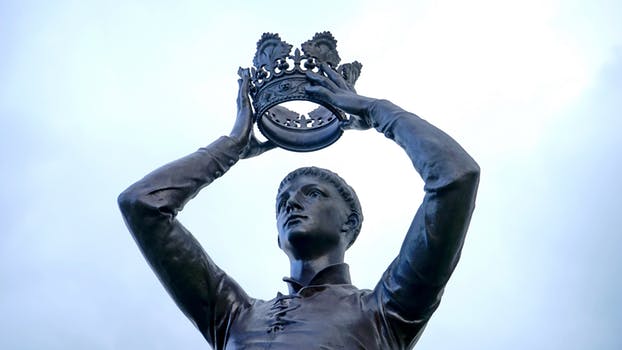
In 1501, the Church of Florence commissioned Michelangelo to sculpt a marble statue of David the Biblical shepherd boy. Because the statue was to be placed on a hill and viewed from below, it needed to be about thirteen and a half feet tall—roughly twice life-size. Proportionally, this created some challenges, but to make it an even greater test of ingenuity, the marble Michelangelo had to work with was not pristine. It was a leftover from an unfinished 1464 sculpture by another artist. Clearly, Michelangelo had his work cut out for him. At this point, the artist was only in his twenties, but he had already made a name for himself with his Pieta in Rome. More to the point, he had spent so much time and concentration honing his skills that even working with another sculptor’s scraps, he was able to free the David from his marble prison. At first read, this might sound like a nice metaphor about art emerging from nature, but it’s at the critical mass of something noted scholar ...

Shattering the Three Myths of Expertise

Image
In the last twenty years we’ve learned a tremendous amount about how expertise is created. Scientists like K Anders Ericsson from Florida State University have been leading the charge. His new book, Peak, Secrets from the new Science of Expertise chronicles years of experiments examing how expertise is attained across a wide spectrum of domains. Ericcson’s findings shatter three commonly held myths about experts. The first myth— Talent is bestowed upon you by winning the genetic lottery .   Many people believe that their IQ, for example, is fixed and nonmalleable, as is their abilities in sports, mathematics, the arts and so on. In other words, you’re either born with talent or you're not. Repeated research has shown that IQ, like early talent in a given domain, has very little causal relationship to the level of expertise you can eventually attain.   Acquiring expertise, instead, shows a one to one correlation with the kind and quality of your training p...

Falling Apples and the Rise of Domain Knowledge

Image
What is the most practical method for generating creativity? Despite our growing understanding of those neural processes, that question haunts every scientist, writer, artist, filmmaker, athlete, inventor, and any other person hoping to make something great. Much has been written about the connection between creativity and what’s called the default network: the mental mechanisms associated with mind wandering and daydreaming. The default network is the soup de jour. This might be because there is something inherently alluring about the idea of epiphany, that bolt-out-of-the-blue inspiration seen as the mind fruit of spontaneous genius. What doesn’t get as much airtime is the role of domain knowledge—that is, the breadth and depth of your familiarity with a given field, including the contents of your associative memory and the sum total of your practice regime. One of the best-known epiphany stories occurred around 1666 when Sir Isaac Newton was allegedly conked on the h...

What Your Grandma and Corporations Have in Common

Image
Imagine your grandma just celebrated her 85th birthday. She's beginning to forget things, but her doctor has reassured you that since, if given enough time, she can eventually pull the information through, it's probably not Alzheimer's. You take some comfort in a recent study that suggests memory retrieval problems might not necessarily be the deterioration of synaptic connections, but more of a space issue. Think of Grandma's hippocampus like a library that, over time, has run out of shelving for the books. As they begin to pile up on the floor, the librarian can still find that edition of Twain's Huckleberry Finn you're after, but it takes a a little more time to scour all the nooks and crannies of the library to locate it. The same might be true for the hippocampus, the memory library. In any event, modern medicine has been good to Grandma. The old family general practitioner has been replaced by a whole bevy of doctors who specialize in any number ...

Transference Bias: A Tale of Bloody Wars, Baby Kings, and Bad Bosses

Image
There was a time, and it was not so long ago, that conventional wisdom said if you were born into nobility, you possessed a set of superior traits that automatically qualified you for governance. Got royal parents? Congratulations, you've won the leadership lottery. There was just one problem: the system often produced people uniquely unqualified to rule. Consider Charles II of Spain. He came from a line of the Spanish Hapsburgs so intermarried that one ancestor appears on his family tree in 14 separate places. Charles took the throne in 1665 despite a host of physical and mental disabilities—he couldn't chew, drooled frequently, was never really educated, and at one point it's rumored he ordered his deceased family members dug up so he could look at them. Consider King George IV of England, famous for his extravagant spending, love of leisure—and utterly selfish, irresponsible behavior. Consider the many kings and queens who were handed the reigns to their count...

Wisdom, Socrates, and the McRibb (not necessarily in that order)

Image
Information is not knowledge and knowledge is not wisdom. This simple truth is often ignored. Maybe it's not surprising. After all, it doesn't take much work for information to masquerade as knowledge. With a million statistics and soundbites at your fingertips, the internet can be an incredible tool for information-mining. But a fistful of data points doesn't necessary translate to truth. It's a concept perfectly embodied by Wikipedia, that convenient-but-at-times-questionable fount of facts, inconsistencies, and outright falsehoods. The idea behind Wikipedia is that once enough people read and edit a post, the best version will ultimately win out. In the abstract, this sounds good, a sort of Darwinian movement towards truth. But the world is full of examples where people individually and/or collectively fail to do the right thing. Kahneman and Tversky’s Prospect theory would go one step further and say that people don’t even always act in their own self-inter...

The Top One Quality of True Leaders

Image
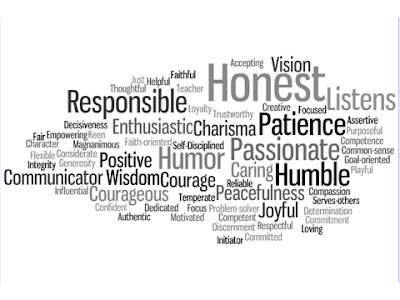
“So, what's up with the pile of words?” you ask. This is part of an experiment we conducted earlier this year on how to be the perfect leader. Sooner or later, most of us wind up in a position of some power, whether it’s running a cub scout den or a girl scout troop, heading up a committee at church or your job, or residing over your flamenco dance group or your flamingo lawn ornament club. And when you nobly accepted the challenge of being in charge, your brain released a little shot of cortisol, the stress hormone. In your moment of panic, you made the executive decision to discover the secret to being a good leader. If you were like me, you went down to your local bookstore and perused the aisles looking for books on leadership. After all, you wanted to be the best president the flamingo lawn ornament club had ever known, recognizing a club needs to be more than really swanky pink shirts. In my case, the bookstore anticipated my arrival and had at the ready a slew of...