Posts

Showing posts with the label illusion

The Frequency Illusion: How Not to Fall for Argle-Bargle
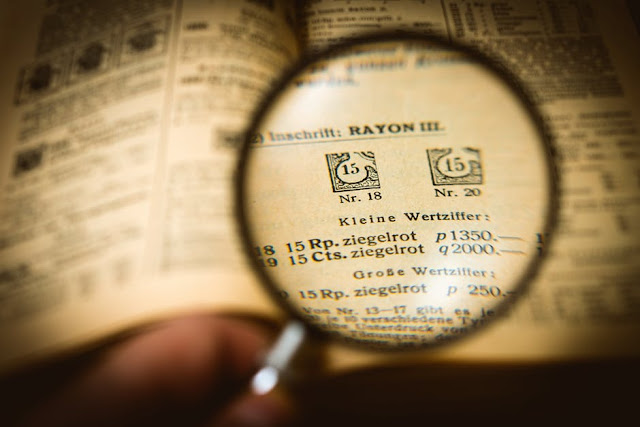
Image
Let’s say you’re reading up on landmark Supreme Court decisions of the past decade. (Hey, everybody needs hobbies.) You’re skimming an article from 2013 about the abolition of DOMA, when you encounter a soundbite from the late Justice Scalia, dismissing his opponent’s arguments as “legalistic argle-bargle.” Hold on a minute. You blink at the page. “Argle-bargle”? Is that a typo? If so, what would it possibly be a typo for? You backtrack and discover, nope, that quote appears in multiple sources. Just what’s going on here? Had Justice Scalia taken leave of his senses? Your answer might depend on your political beliefs, but at least as far as this particular phrase goes, the man was not talking nonsense. As The Atlantic explained to its confused readers at the time , Antonin was simply using an old-fashioned Scottish word for “nonsense,” basically an across-the-pond equivalent to “mumbo-jumbo.” You absent-mindedly add a new word to your vocabulary, and continue on with your wor...


How the Decoy Effect Makes Dupes of Us All

Image
Imagine that, on the second morning of a business trip, you go to unzip your suitcase, only to realize you forgot to pack any pants. With just a few hours before a big presentation, you duck into the closest mall, for a shopping trip with a firm deadline. You step into a promising store, and with the help of a sales clerk, you quickly narrow the pool of potential pants to just two options. Pair A is stylish and flattering, but they’re pushing your emergency pants replacement budget at $70. Pair B won’t turn any heads, but they fit fine, and they’re on sale for $20. ‘Is it worth it to splurge on a pair of pants I’ll only need to wear once?’ you ask yourself, frowning in the dressing room mirror. ‘The cheaper ones will get the job done, and it’s not like I don’t have nice pants at home.’ Just then, the clerk knocks on the door. “Hey,” she says, “As long as you’re trying on slacks, we just got a new shipment in, and I think we’ve got your size.” She passes you a new pair of p...

The Problem(s) With Myers-Briggs in Business

Image
Imagine going to a corporate team-building event where everyone in your office was sorted and evaluated based on the results of taking one of those time-wasting Buzzfeed quizzes, like “Which Disney Character Would You Be Friends With?” or “ Which Muppet Are You? ” It might make for an interesting afternoon, or at least a weird story to tell the next time you’re at a party, but it probably wouldn’t leave you feeling like you had gained some crucial self-insight to help you function better at work or in your home life. Clicking through an online quiz might be a decent way to procrastinate, but in the back of our minds, we all know that Buzzfeed doesn’t employ a lab of white-coated psychologists to study, for instance, the deep-seated implications of preferring Cartoon Network to Nickelodeon. It may be fun, but we wouldn’t call it science . This brings us to the Myers-Briggs. You’ve probably heard of Myers-Briggs, or as it’s more formally known, the Myers-Briggs Type Indicator sur...

Fallen Empires and Phony Wine: The Seersucker Effect

Image
Making iffy predictions about our future: it’s been a hallmark of human behavior for at least as long as we’ve been recording our present. Perhaps the most famous early example of forecasting took place in Mount Parnassus in Delphi, Greece. From roughly the 8th century BCE to the 4th century BCE, for nine days each year, travelers could pay to pose their burning questions to the Pythia, a priestess said to channel the wisdom of Apollo. To a modern reader, perhaps a bit skeptical about the whole Greek gods thing, it may be unsurprising to learn that the Pythia phrased her answers as riddles, arguably granting her some convenient wiggle room. For instance, as the story goes, King Croesus once asked a Pythia if he should attack the neighboring Persian Empire. "Cross the border and a great empire will fall,” she told him. Encouraged, Croesus brought his troops over the border—and suffered a crushing defeat. Her reaction was to coolly point out that he had failed to make her s...

Confirmation Bias and the Parasites Nesting in Your Brain

Image
"What is the most resilient parasite?” asks Leonardo DiCaprio in the 2011 movie Inception . “Bacteria? A virus? An intestinal worm?”   Before anyone can ask what exactly he’s getting at—or volunteer some gruesome facts about, say,  toxoplasmosis  —DiCaprio answers his own question. “An idea,” he declares, with a meaningful squint. “Resilient... highly contagious. Once an idea has taken hold of the brain, it's almost impossible to eradicate.” Metaphors aside, Leo’s got a point. We all know someone clinging steadfast to a belief that is provably false. How can an otherwise intelligent person end up with such blatant blind spots, seemingly immune to logic or fact? One culprit is confirmation bias.   Confirmation bias occurs when you selectively choose what information to value, and what information to discard, based on the picture you want to paint for yourself. Imagine a detective who needs to believe his client is innocent so badly, he keeps insisting tha...

Why Evidence Doesn't Matter

Image
Given that a good reporter is supposed to be both truthful and balanced, how should journalists cover an issue when opposing camps refuse to agree on the very nature of the truth? (In other words, in this current political climate, how should journalists cover literally any issue at all?) As psychology professor Derek J. Koehler  explained last year in a piece  for  New York Times Sunday Review , “standard journalistic practice” is to represent both sides of an issue, but when the vast majority of qualified experts share one stance on a topic, while only a tiny minority disagree, giving equal weight to each viewpoint can be extremely misleading. The BBC has adopted “weight of evidence” reporting, which attempts a compromise by giving airtime to experts with both perspectives, while also being careful to inform the public that one school of thought is far more widely accepted. However, Koehler had his suspicions about how effective this really was, so he decided t...

The Proportionality Problem

Image
Decision making: it’s what humans do.  Estimates are that the average adult makes 35,000 decisions a day. Of those daily decisions, 226 involve food choice.  The fact that you’re reading this suggests that, for the most part, your decisions have allowed you to stay above room temperature, and live your life. Still: are you the kind of person who tends to make good decisions? How well have you navigated through the maze of everyday choice? Can you point to at least a couple of dead ends from your past? In all honesty, if you had the chance, how many do-overs would you take? Given that our brains tend to remember our successes while confining our mistakes to the outer reaches of our minds, many of us probably think our decision-making is pretty good. The truth might not be so comforting.  After all, there’s a reason Las Vegas can support over 62,000 hotel rooms on the strip alone. According to PBS, $6 billion are lost every year in Vegas. Gambling aside...

You and I are not that Smart

Image
Soundbites, those tiny verbal morsels, are ubiquitous. From billboards to tweets to political slogans, we are awash in them.  Soundbites are the rhetorical currency of the 21 st century. These quick, appealing messages are crack cocaine for the amygdala, the emotional processing center of the brain.  While we might assume that the prefrontal cortex, home of executive control and rational thinking, might overpower or at least subdue this powerful emotional drug. Frequently, it does not. In fact, research shows if a soundbite is repeated often enough, the prefrontal cortex lets go of the steering wheel altogether, allowing the amygdala to slide into the driver’s seat. The message plays directly to your feelings, free of logical scrutiny. This is part of why politicians obsessively repeat their talking points—and why it works. It is a fundamental human brain flaw. Statistically, immigrants commit fewer crimes than the rest of the population. Statistically, you are more...