Posts

Showing posts with the label animals

Meet the Monkeys at the Forefront of Discovery

Image
  Science news is full of what certainly sound like promising new studies featuring lab mice or lab rats as the test subjects. New treatments are assessed, and psychological truths are mined. Reading about this research, it’s easy to feel like we are witnessing the first steps of something big, something impactful. However, you are not a mouse (we assume). If you have ever read a conclusion from a mouse behavior study and wondered at the exact practical implications to your life, it turns out you had a pretty good point. For instance, more than 80% of medical treatments tested on animals—usually mice—fail when tested on people. Mice are cheap, easy to genetically modify, and we share 99% of our genes, but that one percent holds some crucial differences, especially when it comes to neuroscience research. For example, mice lack a dorsolateral prefrontal cortex, which is involved with human learning, memory, and cognition. It’s hard to model, let’s say, a mental illne...

Never See a Bat the Same Way Again

Image
As Halloween approaches, let’s pause for a moment to consider a common piece of creepy iconography in Western culture: the bat. Associated as they are with darkness, caves, leathery skin stretched over bony wing bones—and yes, in the case of the vampire bat, blood-sucking—it’s no wonder they’ve become a symbol of all things spooky. Yet, there’s more to these humble non-rodents than thrills and chills. Scientists hope their brains might hold the key to a human mystery: just how do we track the relative position of people around us? Luckily, "A bat's hippocampus is very similar to a human's,” Professor Nachum Ulanovsky of the Weizmann Institute of Science in Israel told Phys.org . “The hippocampus is very important for things like spatial and social memory." And while bats are not the smartest member of the animal kingdom—they don’t have the tool use of elephants or the trickery of corvids—they are highly social creatures, as well as famously good navigators. ...

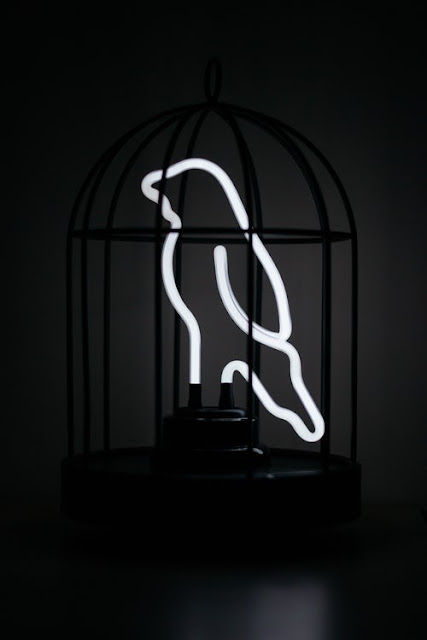
Why the Secret to Language May Be Hiding in Your Birdcage

Image
The Bengalese finch is what happens when for 250 years, people breed the white-rumped munia for its snowy plumage. It’s paler than its wild counterpart, more social. And although its genetic architects (bird breeders) weren’t selecting for singing skills, the Bengalese finch has a farmore complex, varied song . That last bit has some fascinating possible implications, concerning how we developed our own unique speaking abilities. The capacity for complex communication requires a wide variety of skills. You don’t just need to be able to recognize and respond to certain cues; in order to parse the meanings of new or unfamiliar cues, you also need to be able to guess at the other party’s intent. This is not something most wild animals have the bandwidth to do. For instance, wild foxes and wolves can’t recognize what it means when a person points to something. No amount of training will pass on the understanding. However, domesticated animals are the result of many generations of ...

Bird Brains: The Secret to Parrot Intelligence

Image
  Parrots: at times, they seem almost suspiciously smart. It’s not just about the talking and the mimicry; the Harvard Gazette reports that an adult parrot can routinely outperform a human four-year-old in a variety of cognition tests, including judging the relative volume of liquids. (Pour equal amounts of juice into a tall thin cup and a short stout one and your average preschooler will opt for the taller cup, while your average parrot won’t be fooled.)   How can a creature with a brain so noticeably different than our own seem to think so clearly? And why is parrot or crow intelligence (or, for that matter, octopus intelligence) so unsettling, compared to say, chimpanzee intelligence? What is it about a smart bird that seems a little spooky?   Science has yet to address the latter questions, but as to that first point, it appears that a breakthrough has been made. University of Alberta neuroscientists Cristián Gutiérrez-Ibáñez, Andrew N. Iwaniuk and D...